

Hong Kong Science and Technology Parks (HKSTP) is one of APAC’s most prominent tech ecosystems - home to thousands of startups, deep tech researchers, and venture-backed scaleups.
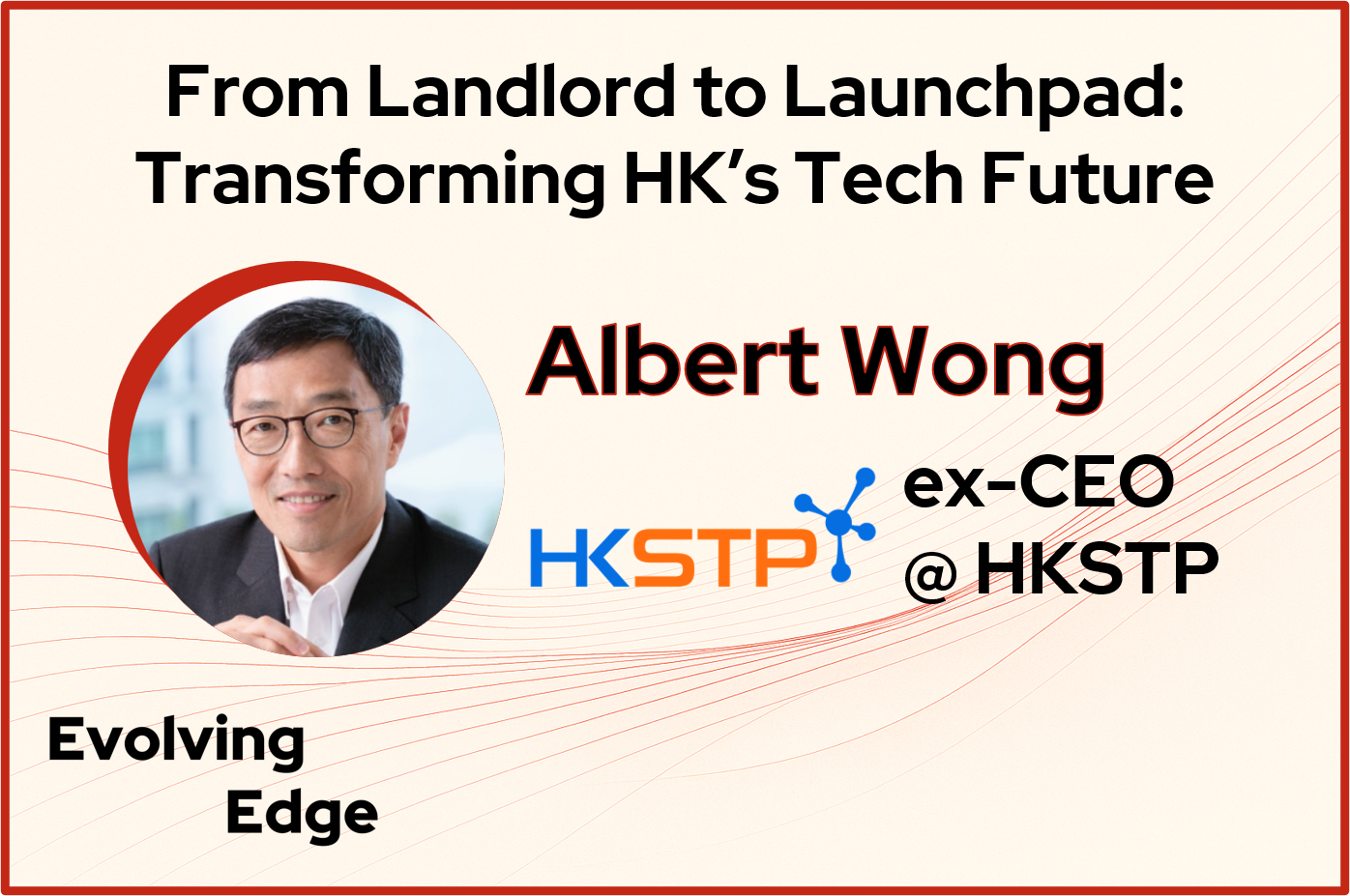
Albert Wong was CEO of HKSTP for almost a decade, before retiring recently. A GE veteran with roots in engineering, M&A, and global operations, Albert brought a commercial edge to what was once a government real estate operation - and became a key architect behind HKSTP’s transformation.
In this Evolving Edge conversation, Albert reflects on the mindset shifts, execution pivots, and platform bets that helped redefine Hong Kong’s innovation identity - and why he believes the most important breakthroughs are still ahead.
Q: For those who may not know your background, can you share a bit about your journey, from engineering and GE to leading HKSTP?
Albert: I was born and educated in Hong Kong and spent most of my career with multinational companies, particularly GE. I held roles across M&A, commercial leadership, and operations. Before joining HKSTP, I was CEO of GE Oil & Gas in China. When a headhunter first approached me about HKSTP, I laughed and said, "You must be joking - Hong Kong doing tech innovation?" But I took the leap in 2016. It turned out to be one of the most fulfilling chapters of my career.
Q: You’ve led HKSTP through a transformative chapter in the past decade. What are you most proud of?
Albert: We made two key changes: one external, one internal. Externally, we turned a real estate project into a thriving innovation and technology ecosystem, now supporting 25,000 people. By the time I left, our venture capital fund reached US$300M, with investments in over 100 companies in deep tech, AI, healthtech, and advanced manufacturing. Every dollar we invested drew 15 times that in external funds, shifting our role from landlords to key ecosystem investors.
Internally, we introduced variable pay to spark an entrepreneurial mindset. By tying compensation to results, we encouraged initiative and innovation, moving away from a fixed, employee-focused perspective. Though initially debated, this shift moved us from routine tasks to measurable outcomes, fostering a proactive, results-driven culture like that of entrepreneurs focused on value and growth.
Q: Looking back on the last decade, how would you describe the evolution of Hong Kong’s tech ecosystem?
Albert: The biggest shift is mindset. Back in the '90s, we used to joke - low tech, low risk; high tech, high risk. That sentiment persisted when I joined in 2016. People were still skeptical. But today, most of society understands: technology is not optional - it’s existential.
Government funding has improved, the startup ecosystem has matured, and most importantly, we’re finally building belief. We’ve gone from why tech? to how fast can we scale? That’s a big change.
The I&T sector is establishing itself as a cornerstone of Hong Kong’s economy, with strong ties to Mainland China’s tech ecosystem. We’re upgrading to rival global hubs like Silicon Valley. Recent startup competitions show our startups have world-class potential. That’s why we have launced the Booster Programmes, offering intensive training, pitching, and business-matching to help them succeed globally.
Q: Hong Kong talent has always been strong, but is risk appetite still a blocker?
Albert: I don’t think Hong Kong people are uniquely risk-averse. Everyone should be. The real issue was: for a long time, it was too easy to make money here through traditional means like property.
What we lacked were visible tech success stories - founders and engineers young people could aspire to. But now we’re seeing more of that. And I always remind people: you don’t need to be a founder to be in tech. If you’re passionate about AI, robotics, or genomics, dive in fully. Research and development offers a deeply fulfilling path, where you can tackle cutting-edge challenges, advancing AI for societal good, designing robots to revolutionize industries, or unlocking genomic breakthroughs for better health. By immersing yourself, you’re not just innovating; you’re shaping a brighter future for humanity.
Q: HKSTP has supported thousands of companies - including multiple unicorns. What separates the breakout successes?
Albert: People love to say: "Just be persistent." Honestly? That advice can be dangerous. I’ve seen too many founders burn a decade chasing a product that wasn’t working.
The reality is: 10 out of 10 startups will need to pivot. If you can’t pivot, you’re finished.
The best founders combine deep conviction with the willingness to adapt. They believe in something others don’t - but when the signals shift, they adjust. That combination of stubborn belief and strategic flexibility is rare, but essential.
And of course, execution matters. Startups have to juggle everything: manufacturing, tech, legal, hiring, fundraising. Those who can manage that chaos while staying focused? They have a real shot.
Q: What's next for Hong Kong innovation? Which sectors do you think will define Hong Kong’s next wave?
Albert: AI, healthtech, genomics, and Web3 - they’ll all play a role. But more importantly, they’re converging. Blockchain meets AI. Genomics meets cloud. These intersections will spark the most innovation.
That’s why I’ve stopped trying to predict the next big thing. Three years ago everyone was obsessed with the metaverse and NFTs. Now, that hype has cooled, but the foundational tech still matters. Trends change. Platforms endure.
At HKSTP, we focused on building the platform - so we’re ready when the next thing hits. As someone from Google once said: "We don’t predict the future. We build the platform so we can catch it."
Q: On retirement, what’s next for you?
Albert: It’s only been two weeks. I’m traveling, spending time with family, and taking it easy. I’ve spent the last nine years running full-speed - so I’m giving myself space to decompress. That said, I’ve already had a few conversations about joining boards, advising funds, and continuing to support the ecosystem in new ways.
I’m also staying in touch with some of the startups I worked closely with at HKSTP - not in any official role, but just to offer guidance. I don’t think I’ll ever fully “retire” in the traditional sense. I’ll always want to be close to innovation, and help the next generation of builders wherever I can.